

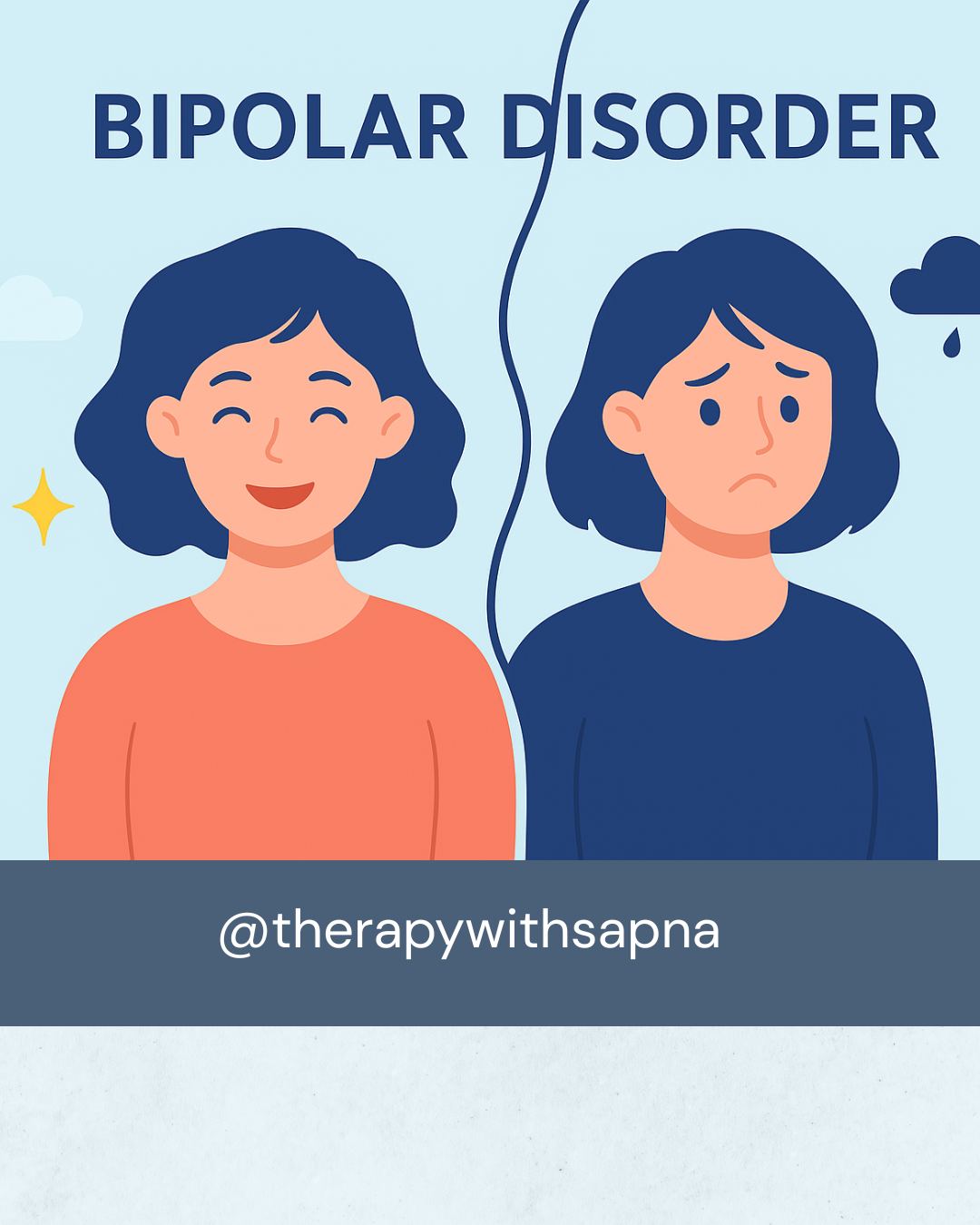
Bipolar Disorder is a chronic condition causing intense and unpredictable shifts in mood and energy, drastically affecting daily life.
Mania/Hypomania: Feeling unusually energetic, elated, or irritable.
Depression: Feeling sad, hopeless, or deeply disinterested.
Bipolar I: Defined by severe manic episodes.
Bipolar II: Involves milder mania (hypomania) and dominant depressive episodes.
Cyclothymic: Frequent, less severe, and long-lasting mood swings.
Global Reach: Over 46 million people worldwide are estimated to live with bipolar disorder.
Early Onset: It often begins between the ages of 15 and 25, though symptoms can appear earlier.
Equal Impact: It affects men and women equally, though symptoms may manifest differently.
Biological Basis: It’s not simply a “mood problem.” Bipolar disorder involves chemical, hormonal, and neurological factors.
Not a Personality Flaw: Many people with bipolar disorder are highly creative and productive individuals; the condition does not define their character or capability.
Manageable Condition: With consistent treatment, therapy, and social support, most people lead stable and fulfilling lives.
These changes are not just mood fluctuations — they can drastically affect work performance, relationships, and daily routines.
Characterized by severe manic episodes that may require hospitalization, often followed by depressive episodes.
Involves milder manic episodes (hypomania) and longer depressive episodes.
Involves frequent, less severe mood swings over a long period.
During mania or hypomania, a person might:
Feel unusually happy, confident, or energetic
Need less sleep but still feel active
Speak rapidly or switch topics quickly
Have racing thoughts or an inflated sense of self-importance
Engage in impulsive or risky behaviors, such as overspending or reckless driving
Manic episodes can escalate to a point where judgment is impaired, and behavior becomes erratic or self-destructive.
During depressive periods, a person might:
Experience persistent sadness, emptiness, or hopelessness
Lose interest in previously enjoyable activities
Feel fatigued or physically drained
Struggle with concentration, memory, or decision-making
Have changes in sleeping or eating patterns
Experience suicidal thoughts or tendencies
The transitions between these phases can be sudden or gradual, making daily life unpredictable and emotionally exhausting.
While there is no permanent cure, bipolar disorder is highly treatable and manageable with the right approach. A personalized treatment plan may include
Helps identify distorted thought patterns and replace them with healthier perspectives.
Focuses on stabilizing daily routines and crucial sleep cycles to significantly reduce the frequency of mood episodes.
Involves family members in education and communication training to create a supportive environment.
Bipolar disorder is a mental health condition that causes extreme shifts in mood, energy, and activity levels. A person may feel unusually happy and energetic (mania or hypomania) at one time and deeply sad or hopeless (depression) at another. These mood changes can affect sleep, behavior, judgment, and overall daily functioning.
Everyone experiences ups and downs, but in bipolar disorder, the mood changes are more intense, long-lasting, and disruptive. They often interfere with work, relationships, and daily life, while regular mood changes don’t usually cause such extreme effects.
There isn’t one single cause. Bipolar disorder often develops due to a combination of genetic, biological, and environmental factors. Family history, brain chemistry imbalance, high stress, sleep disturbances, or trauma can all contribute to its onset.
Bipolar disorder can’t be completely cured, but it can be effectively managed. With the right treatment plan — including medication, counseling, lifestyle balance, and family support — individuals can lead healthy, fulfilling, and stable lives.
Counseling helps individuals understand their condition, identify early warning signs, and manage their emotions better. Through approaches like Cognitive Behavioral Therapy (CBT), Interpersonal Therapy, and psychoeducation, therapy teaches coping skills, stabilizes routines, and strengthens relationships — making long-term recovery much smoother.
Bipolar disorder can feel overwhelming, but it is not a life sentence. With awareness, professional treatment, and compassionate support, individuals can reclaim control and live balanced, fulfilling lives.
Remember — seeking help is not a sign of weakness but a step toward strength and healing. If you or someone you know is experiencing extreme mood changes, reach out to a mental health professional. Early diagnosis and consistent therapy can prevent episodes from worsening and promote lasting emotional well-being.
You are not alone — help, hope, and healing are always within reach.

As a psychologist, I’m passionate about empowering individuals to achieve holistic wellness.
Here, we talk on topic:
Mental Health: Stress management, anxiety, depression, and more
Physical Health: Nutrition, exercise, and overall wellness
Child Psychology: Parenting tips, child development, and behavioral guidance
Relationships: Building strong connections, communication, and conflict resolution
Teenagers’ Psychology: Adolescent development, self-esteem, and emotional intelligence
Cancer Awareness: Education, support, and resources for patients and caregivers Join me on this journey towards holistic health and wellness.

©Copyright 2024 powered by Therapy with Sapna