Professional psychological counselling for OCD can help you regain control over intrusive thoughts and compulsive behaviours.
What Is Obsessive-Compulsive Disorder (OCD)?
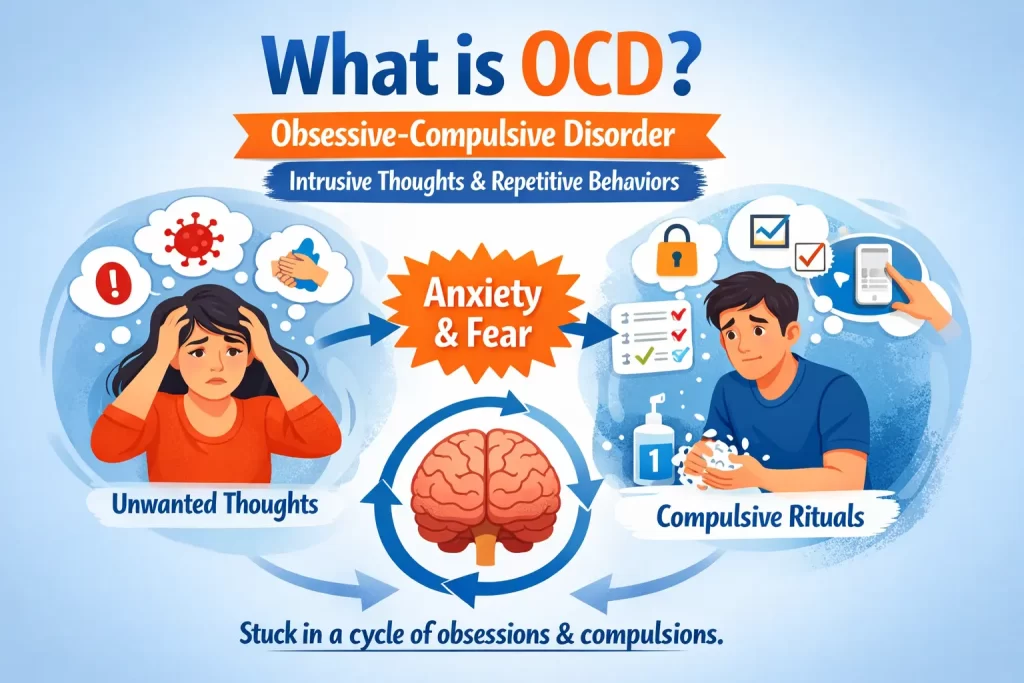
Obsessive-Compulsive Disorder (OCD) is a chronic mental health condition characterized by intrusive, unwanted thoughts (obsessions) and repetitive behaviors or mental rituals (compulsions) performed to reduce anxiety.
These thoughts feel uncontrollable and often go against a person’s values, which makes them deeply distressing.
People with OCD are usually aware that their thoughts are irrational, yet the anxiety feels so intense that resisting compulsions becomes extremely difficult.
Common Symptoms of OCD
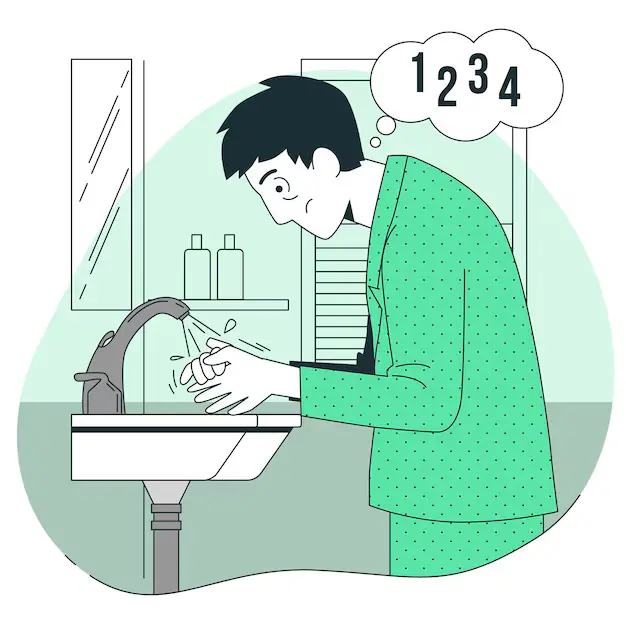
Excess Washing
Fear of Germ
Counting Rituals
Excess Washing
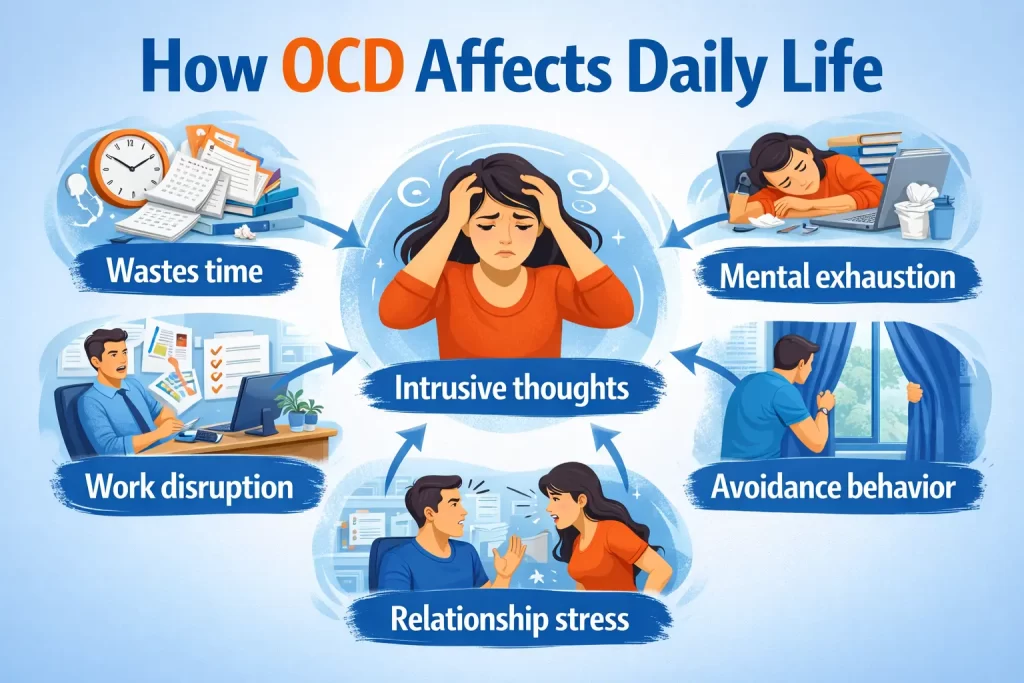
How OCD Affects Daily Life
Untreated OCD can significantly affect personal, social, and professional life. People may spend hours performing rituals or mentally checking. Relationships can suffer due to reassurance-seeking or avoidance behaviors. Work productivity may drop because of indecision, perfectionism, or mental exhaustion.
Many individuals hide their symptoms due to shame or fear of being misunderstood, which delays seeking help.
OCD vs OCPD: Why the Difference Matters
OCD
Intrusive thoughts
High Anxiety
Compulsive Rituals
Feels Distressing
Wants relief
OCPD
Perfectionism
Need Control
Rigid Rules
Feels “right”
Less Distress
What Causes OCD?
OCD usually develops due to a mix of biological and emotional factors, not because of weakness or choice. It can be linked to:
Brain chemistry (like serotonin imbalance)
Genetics (family history of OCD/anxiety)
Brain functioning (fear and habit control system)
Stress or trauma (major life events can trigger symptoms)
Personality traits (perfectionism, high responsibility, fear of mistakes)
OCD becomes stronger over time because compulsions give temporary relief, which reinforces the cycl
When Should You Seek Counselling for OCD?
If intrusive thoughts feel uncontrollable
If compulsions take up significant time
If anxiety interferes with work or relationships
If reassurance never feels enough
If you feel mentally exhausted or stuck
These are signs that professional help can be beneficial.
Frequently Asked Questions about OCD
Is OCD curable?
OCD is highly treatable. Many people experience significant symptom reduction with therapy and proper support.
Can OCD go away on its own?
Symptoms may fluctuate, but without treatment, OCD often persists or worsens.
Is OCD the same as anxiety?
OCD is related to anxiety but is a distinct condition with its own treatment approach.
Helping You Find Balance and Growth
As a psychologist, I’m passionate about empowering individuals to achieve holistic wellness.
Here, we talk on topic:
Mental Health: Stress management, anxiety, depression, and more
Physical Health: Nutrition, exercise, and overall wellness
Child Psychology: Parenting tips, child development, and behavioral guidance
Relationships: Building strong connections, communication, and conflict resolution
Teenagers’ Psychology: Adolescent development, self-esteem, and emotional intelligence
Cancer Awareness: Education, support, and resources for patients and caregivers Join me on this journey towards holistic health and wellness.
Healing the whole person - body, mind, and spirit.