


Schizophrenia is a serious mental health condition that changes the way a person thinks, feels, and experiences the world. Someone living with schizophrenia may:
This can sometimes make it feel as if the person is disconnected from reality, which can be very challenging for them and their loved ones.
At Therapy with Sapna, we work with individuals and families to create a safe, compassionate space where treatment feels supportive rather than overwhelming — because living with schizophrenia is difficult, but no one has to face it alone.
The exact cause of schizophrenia is not fully understood, but research suggests it may be linked to a mix of genetics, brain chemistry, brain structure, and environmental factors.
Schizophrenia tends to run in families, which means some people may inherit a higher chance of developing it. Often, it appears during big life changes — like teenage years, early adulthood, or periods of high stress.
Some studies show that the way the brain develops during pregnancy — especially in forming pathways and connections — may play a role in schizophrenia later in life.
Some studies show that the way the brain develops during pregnancy — especially in forming pathways and connections — may play a role in schizophrenia later in life.
Severe viral infections or immune problems during a mother’s pregnancy are environmental risk factors for the child developing schizophrenia later in life.
The signs of schizophrenia can look different for each person. For some, symptoms may develop slowly over time, while for others they may appear suddenly. The condition often goes through cycles of relapse and remission — times when symptoms get stronger and times when they ease.
If someone shows several of these signs for more than two weeks, it’s important to seek professional help early. Timely support can make a huge difference in managing symptoms and preventing complications.
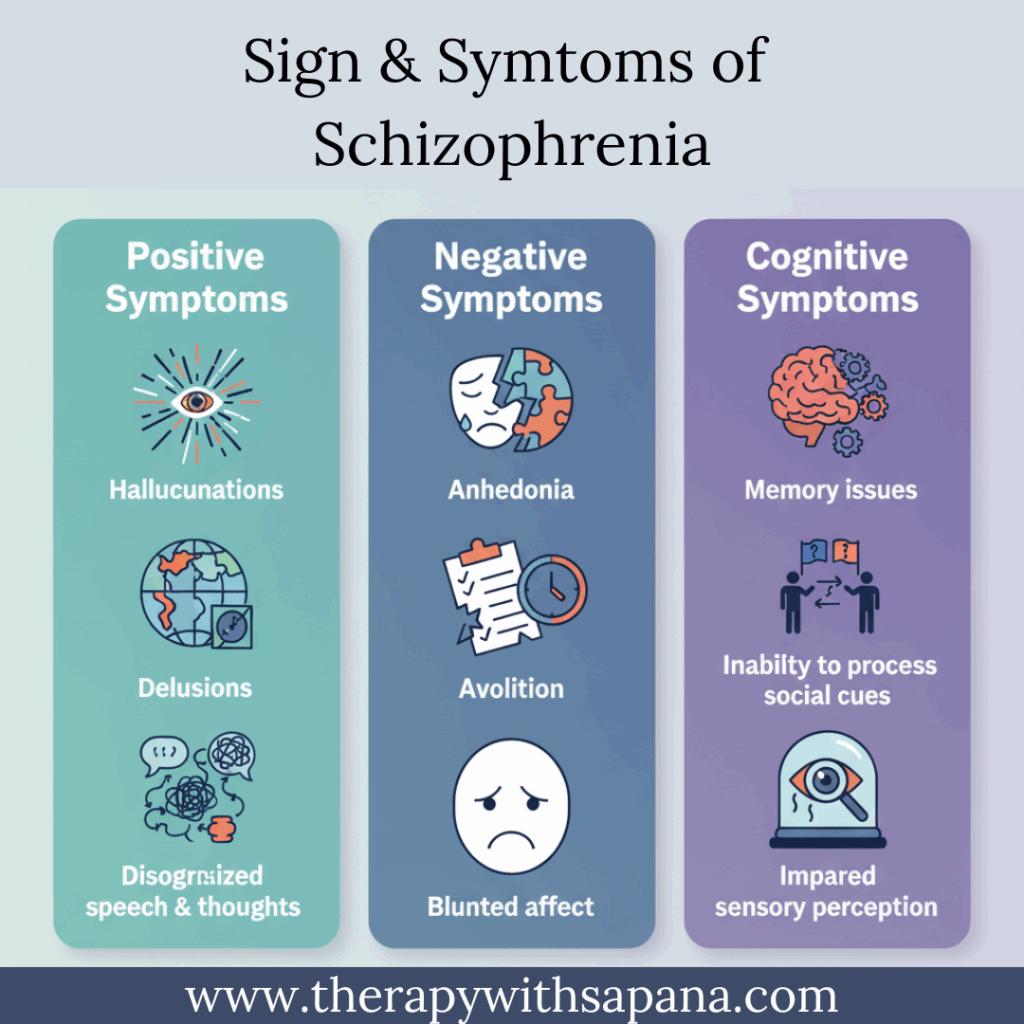
Schizophrenia is defined by a range of symptoms, which are often grouped into categories based on how they affect the person’s experience. Mental health professionals often describe these as either positive (things added to a person’s experience) or negative (things that are reduced or missing).
Schizophrenia can impact work, school, and social interactions. People may struggle with organizing tasks, managing emotions, or maintaining relationships, but support and treatment can improve daily functioning.
Symptoms may develop gradually or appear suddenly, often triggered by stress, major life changes, or substance use. Early intervention can help manage symptoms effectively.
No. Hallucinations (seeing or hearing things that aren’t there) and delusions (false beliefs) vary widely among individuals. Some may hear voices, while others experience unusual beliefs or feelings.
Yes. Many people with schizophrenia experience difficulty concentrating, remembering details, or making decisions. Cognitive therapies can help improve these skills.
Genetics can play a role, meaning having a family member with schizophrenia slightly increases risk. However, not everyone with a family history will develop the condition
No. Hallucinations (seeing or hearing things that aren’t there) and delusions (false beliefs) vary widely among individuals. Some may hear voices, while others experience unusual beliefs or feelings.

As a psychologist, I’m passionate about empowering individuals to achieve holistic wellness.
Here, we talk on topic:
Mental Health: Stress management, anxiety, depression, and more
Physical Health: Nutrition, exercise, and overall wellness
Child Psychology: Parenting tips, child development, and behavioral guidance
Relationships: Building strong connections, communication, and conflict resolution
Teenagers’ Psychology: Adolescent development, self-esteem, and emotional intelligence
Cancer Awareness: Education, support, and resources for patients and caregivers Join me on this journey towards holistic health and wellness.

©Copyright 2024 powered by Therapy with Sapna