

Emotional eating is when food becomes a way to cope with emotions rather than satisfy physical hunger. People may eat when they feel stressed, anxious, lonely, bored, or overwhelmed. Over time, this can affect both weight and emotional well-being. Understanding the reasons behind emotional eating is the first step toward changing it.

Emotional hunger often comes suddenly, creates cravings for comfort foods, and may continue even when you are full. Unlike physical hunger, it is driven by feelings rather than the body’s need for nourishment.
Many people eat in response to emotions without realizing it. Common triggers include:
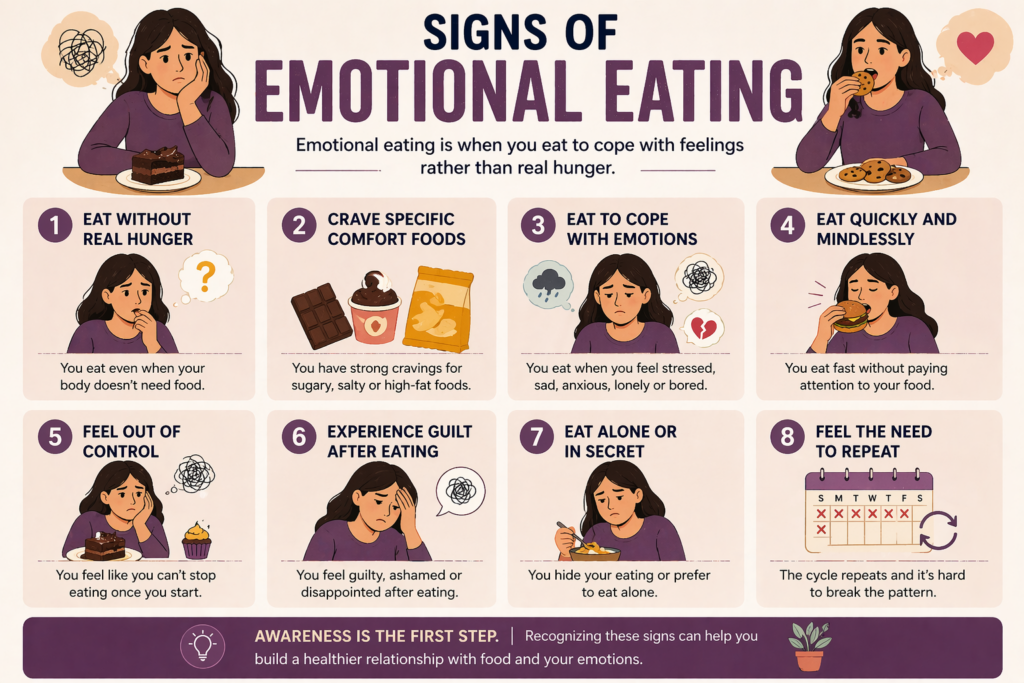
Recognizing patterns can help break the cycle. Signs may include:
The goal is not restriction, but learning healthier responses to emotions.

As a psychologist, I’m passionate about empowering individuals to achieve holistic wellness.
Here, we talk on topic:
Mental Health: Stress management, anxiety, depression, and more
Physical Health: Nutrition, exercise, and overall wellness
Child Psychology: Parenting tips, child development, and behavioral guidance
Relationships: Building strong connections, communication, and conflict resolution
Teenagers’ Psychology: Adolescent development, self-esteem, and emotional intelligence
Cancer Awareness: Education, support, and resources for patients and caregivers Join me on this journey towards holistic health and wellness.

©Copyright 2024 powered by Therapy with Sapna